


Grass Jelly Powder Production Process: From Mesona Leaves to Powder
Grass jelly powder (also known as black jelly powder) is one of the most widely used ingredients in Asian beverages and desserts. The powder is made from Mesona Chinensis — a natural herb that produces soft, dark jelly with a refreshing herbal aroma.
Understanding the grass jelly powder production process is essential for importers, beverage factories, and bubble tea brands who care about quality, consistency, and food safety.
This complete guide explains every step, from sourcing raw leaves to the final packaged powder ready for export.
Why Understanding the Production Process Matters
For manufacturers, distributors, and importers, knowing how grass jelly powder is made helps to:
-
Evaluate supplier expertise
-
Understand quality differences
-
Ensure food safety compliance
-
Avoid inconsistent batches
-
Verify certifications
-
Ensure product fits OEM standards
A transparent production process is a sign of a trustworthy and professional supplier.
>> Visit our Alibaba site: ducquy.trustpass.alibaba.com
⭐Step-by-Step Grass Jelly Powder Production Process
The production process can be divided into 8 main stages.

1. Sourcing Mesona Chinensis Leaves
The quality of grass jelly powder depends heavily on the quality of the raw herb.
Where the leaves come from:
-
Mountainous areas of Northern Vietnam: Lang Son, Cao Bang, Bac Giang
-
Regions with naturally cool climates
-
Clean, mineral-rich soil
Quality checks before production:
-
Color of leaves
-
Aroma
-
Moisture content
-
Pesticide residue testing
-
Checking for mold or contamination
A reliable factory only purchases leaves from verified farms and maintains long-term partnerships with local farmers.
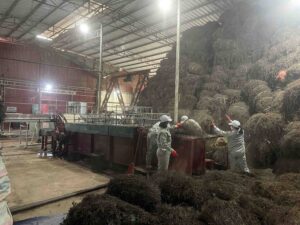
2. Cleaning & Pre-Processing
Leaves are delivered to the factory and undergo the first hygiene step.
Cleaning includes:
-
Removing stones, dust, and impurities
-
Washing with clean water
-
Passing through sanitation filters
-
Drying to remove surface moisture
This ensures that only clean, safe raw materials enter the extraction stage.
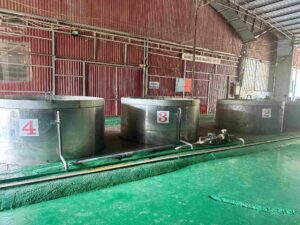
3. Herbal Extraction (The Heart of the Process)
This is the key stage where the natural aroma and jelly-forming compounds are extracted.
Extraction method:
-
Leaves are placed in large stainless-steel extraction tanks
-
Water is added
-
Heated at controlled temperatures
-
Allowing active compounds (polysaccharides) to dissolve
Key extraction goals:
-
Preserve the dark herbal color
-
Extract natural aroma
-
Maximize jelly-forming agents
-
Ensure clean, stable liquid extract
Poor extraction will lead to jelly that is too soft, watery, or unstable.
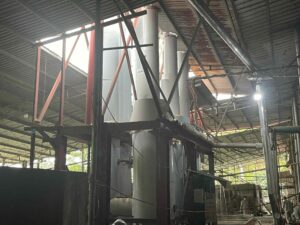
4. Filtration & Purification
After extraction, the herbal liquid still contains fibers, sediments, and potential contaminants from raw agricultural materials.
The filtration and purification stage ensures the extract is clean, safe, and suitable for spray-drying.
Filtration removes:
-
Leaf residue
-
Coarse and fine fibers
-
Natural sediments
-
Impurities from field handling
-
Residual fertilizers from raw leaves
-
Trace heavy metals that may be present in agricultural soil
This multi-stage filtration process results in a clean, smooth, and purified herbal extract, ensuring safety, stability, and high-quality color consistency before moving to the drying phase.
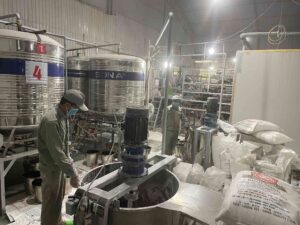
5. Concentration (Optional)
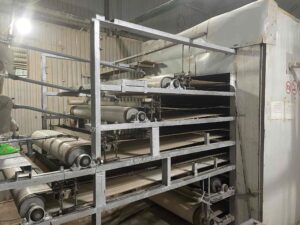
Some factories concentrate the extract to reduce moisture before spray-drying.
Benefits:
-
Saves energy during spray drying
-
Produces stronger aroma
-
Enhances color consistency
This step depends on factory technology and product specification.
6. Spray-Drying into Powder (Most Important Stage)
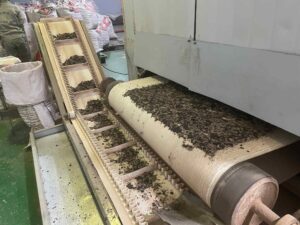
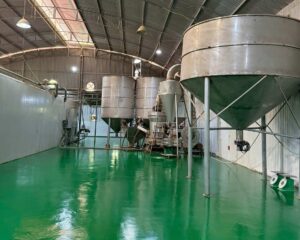
Spray-drying is the modern industrial method for turning herbal extract into powder.
How the process works:
-
Liquid extract is fed into a spray-dryer
-
Hot air converts droplets into powder instantly
-
Moisture evaporates
-
Fine powder falls into collection chambers
Why spray-drying is preferred:
-
Retains aroma
-
Ensures high solubility
-
Produces uniform powder
-
Safe and hygienic
-
Long shelf life
Well-maintained spray-dryers ensure consistent particle size and color.
7. Blending & Standardization
After spray-drying, the powder is blended with corn starch for stability.
Typical formula:
-
85% Grass Jelly Extract Powder
-
15% Corn Starch
This combination creates a perfect jelly texture—soft, flexible, not too brittle.
Blending ensures:
-
Uniform color
-
Consistent flavor
-
Stable gelling strength
-
Batch-to-batch quality control
8. Final Quality Testing
Before packaging, each batch is tested by a QC (Quality Control) team.
Testing includes:
-
Moisture content (ideal ≤ 8%)
-
Color of powder
-
Aroma strength
-
Jelly color after cooking
-
Jelly firmness
-
Microbial safety (E. coli, Salmonella, total plate count)
-
pH level
-
Heavy metal testing
Every reputable supplier provides a COA (Certificate of Analysis).
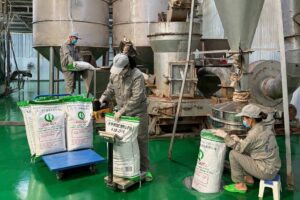
9. Packaging & Export Preparation
Once the product passes quality testing, it is packed in:
Common export packaging:
-
1 kg bags
-
10–20 kg cartons
-
25 kg PP/kraft bags
-
OEM printed bags
-
Palletized shipments
Export documentation includes:
-
COA
-
Invoice
-
Packing list
-
Certificate of origin
-
HALAL certificate (if needed)
-
FDA registration details
Vietnam’s export system supports fast, safe shipments to Asia, the Middle East, the U.S., and Europe.
⭐Why High-Quality Production Matters
A good grass jelly powder production process ensures:
✔ Consistent jelly color
✔ Stable texture
✔ Natural aroma
✔ Safe for consumption
✔ Meets international import requirements
✔ Long-term supply stability
Poor processes lead to weak jelly, bitter taste, or inconsistent batches — all of which cause customer complaints.
What Makes Vietnam Stand Out in Production
Vietnamese factories have become leading exporters due to:
-
Advanced extraction technology
-
Modern spray-drying systems
-
High-quality raw materials
-
ISO 9001, ISO 22000, HACCP certifications
-
Strong QC teams
-
Competitive pricing
-
Reliable shipping
Duc Quy Foods is among the recognized manufacturers in Lang Son, Northern Vietnam.
FAQ — Grass Jelly Powder Production
Q1: What is the shelf life of grass jelly powder?
Usually 18–24 months.
Q2: Is spray-drying safe?
Yes — it is the most hygienic and efficient industrial drying method.
Q3: Are artificial colors added?
High-quality suppliers use 100% natural color from the Mesona plant.
Q4: Can the formula be customized?
Yes — OEM and private label formulas are available.
Q5: How do I verify real manufacturers?
Ask for certifications, factory photos, and a virtual tour.
Conclusion
Understanding the grass jelly powder production process helps importers and distributors judge product quality and assess supplier reliability.
From sourcing Mesona leaves to spray-drying and packaging, every step affects the final jelly’s color, texture, aroma, and safety.
Reliable Vietnamese manufacturers follow ISO, HACCP, and food safety systems to produce consistent, export-ready grass jelly powder for global markets.
