


How to Choose a Reliable Grass Jelly Powder Supplier in Vietnam (2025 Guide)
Vietnam has become one of the world’s leading producers of Grass Jelly Powder, supplying beverage factories, bubble tea brands, dessert manufacturers, and food distributors across Asia, the Middle East, and the United States.
With high-quality Mesona Chinensis raw materials and strong manufacturing capabilities, many importers now look specifically for a grass jelly powder supplier in Vietnam instead of China or Taiwan.
However, choosing the right supplier is not always simple. This guide explains exactly what to look for so importers can avoid risks, ensure consistent quality, and build long-term supply partnerships.
Why Import Grass Jelly Powder from Vietnam?
Before choosing a supplier, it’s important to understand why Vietnam is a top sourcing destination:
1. Natural Growing Regions
Northern provinces like Lang Son, Cao Bang, and Bac Giang have ideal climates for Mesona Chinensis.
2. Large-Scale Factories
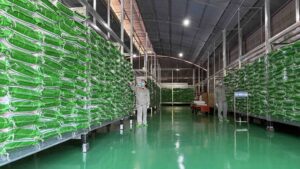
Vietnamese manufacturers have invested heavily in spray-drying technology, extraction systems, and automated packaging.
3. Competitive Prices
Pricing is lower than Taiwan and more stable than China.
4. Strong Export Compliance
Top suppliers meet ISO 9001, ISO 22000, HACCP, HALAL, FDA standards.
5. Reliable Logistics
Vietnam handles global shipments efficiently by sea and air.
Key Criteria to Evaluate a Grass Jelly Powder Supplier in Vietnam
Below are 10 factors importers must check before choosing a long-term partner.
1. Certifications (Non-Negotiable)
A reliable grass jelly powder supplier in Vietnam must have international certifications:
-
ISO 9001 – Quality management
-
ISO 22000 – Food safety management
-
HACCP – Hazard control
-
HALAL certification – For Muslim markets
-
FDA registration – Necessary for U.S. import
-
COA (Certificate of Analysis) for each batch
If a supplier cannot provide these documents, avoid them.
2. Factory Production Capacity
Stable and sufficient capacity ensures the supplier can support your growth.
What to check:
-
Monthly output (reputable factories produce 50–200 tons/month)
-
Number of spray dryers
-
Number of extraction tanks
-
Workforce capacity
-
Internal QC team
Higher production capacity = more stable supply and fewer delays.

3. Raw Material Origin
Authentic grass jelly powder must be made from Mesona Chinensis leaves.
Ask suppliers:
-
Where do they source leaves?
-
Are farmers contracted?
-
Do they test raw materials for pesticides/heavy metals?
Vietnamese highland regions produce excellent raw materials — suppliers using imported low-grade leaves should be avoided.
4. Product Consistency
Bulk buyers require consistent color, texture, aroma across every batch.
Check:
-
Sample vs. COA comparison
-
Color of powder
-
Jelly color after processing
-
Firmness and texture
-
Aroma (must be natural and herbal)
Consistency is often the factor that separates real manufacturers from small traders.
5. Transparent Ingredients and Formula
The standard formula:
-
85% Grass Jelly Starch
-
15% Corn Starch
Suppliers who include artificial coloring or fillers may offer lower prices but cause product instability.
Always request:
-
Ingredient breakdown
-
Additive list
-
Moisture percentage
-
Microbial test results
6. Pricing and Hidden Costs
A reliable supplier offers clear price breakdowns:
-
FOB / CIF Price
-
MOQ (usually 200–500 kg for OEM, 1–5 tons for bulk)
-
Packaging cost
-
OEM printing fee
-
Port charges
Avoid suppliers who give vague or unusually low prices — often a warning sign.
7. Packaging & Export Readiness
The supplier must offer export-ready packaging such as:
-
1 kg bags
-
10–20 kg cartons
-
25 kg kraft bags
-
Palletized shipments
-
OEM/Private label options
Good packaging ensures protection against moisture and contamination.
8. Communication & Customer Service
Check if the supplier:
-
Responds quickly
-
Provides full technical documents
-
Gives professional quotations
-
Understands international trade terms
Good communication = smooth long-term cooperation.
9. Reviews, Export History & Market Familiarity
A trustworthy supplier has proven exports to countries like:
Taiwan | China | Indonesia | Malaysia | Philippines | Bangladesh | India
Export experience reduces risks at customs and ensures compliance.
10. Factory Visit or Virtual Tour
Ask for:
-
Factory photos
-
Video tour
-
Production line footage
-
Certificates
-
QC room photos
This helps verify the supplier is a real manufacturer, not a middleman.
Common Mistakes Importers Should Avoid
❌ Choosing suppliers solely by price
Very low prices often mean low-quality raw materials or fillers.
❌ Not testing product samples
Always cook the jelly and check firmness/color yourself.
❌ Not verifying certifications
Fake certificates are common with small traders.
❌ Ignoring batch consistency
Some suppliers change formulas without notice.
❌ Not checking export experience
New exporters may make documentation errors, delaying shipments.
How Duc Quy Foods Meets These Standards
As one of Vietnam’s established grass jelly powder suppliers, Duc Quy Foods ensures:
-
ISO 9001, ISO 22000, HACCP certified
-
HALAL certified
-
FDA registered
-
Monthly capacity 300+ tons
-
Strict QC from raw material to final packaging
-
Export-ready documentation
-
Supply to 7+ Asian markets
-
OEM & Private Label services
Suppliers with this level of compliance are ideal for long-term importing partnerships.
>> Visit our Alibaba site: ducquy.trustpass.alibaba.com
FAQ – Choosing a Grass Jelly Powder Supplier in Vietnam
Q1: What is the minimum order quantity (MOQ)?
Most factories require 200–500 kg, but OEM may require more.
Q2: Is grass jelly powder vegan?
Yes. It’s plant-based and suitable for vegetarian markets.
Q3: Do suppliers provide free samples?
Reputable factories usually offer paid or free samples with courier fee.
Q4: How long does production take?
Standard lead time: 7–15 days depending on quantity.
Q5: Can I request customized formulas?
Yes — reputable factories provide R&D and OEM formulation.
Final Recommendation
Selecting a reliable grass jelly powder supplier in Vietnam requires careful evaluation of certifications, ingredient consistency, export capacity, communication, and manufacturing transparency.
For long-term success, importers should prioritize suppliers with:
-
Certified quality
-
Strong factory capability
-
Transparent pricing
-
Proven export history
-
Real production facilities
This ensures stability, safety, and trust in every shipment.
